Does Your Delivery Need an Orchestrator?

Mélanie Rolion
Directrice de projet
Mélanie, our project director reveals 3 key principles for transforming product delivery. Discover how to orchestrate your team to move from chaos to clarity, inspired by our support with several clients.
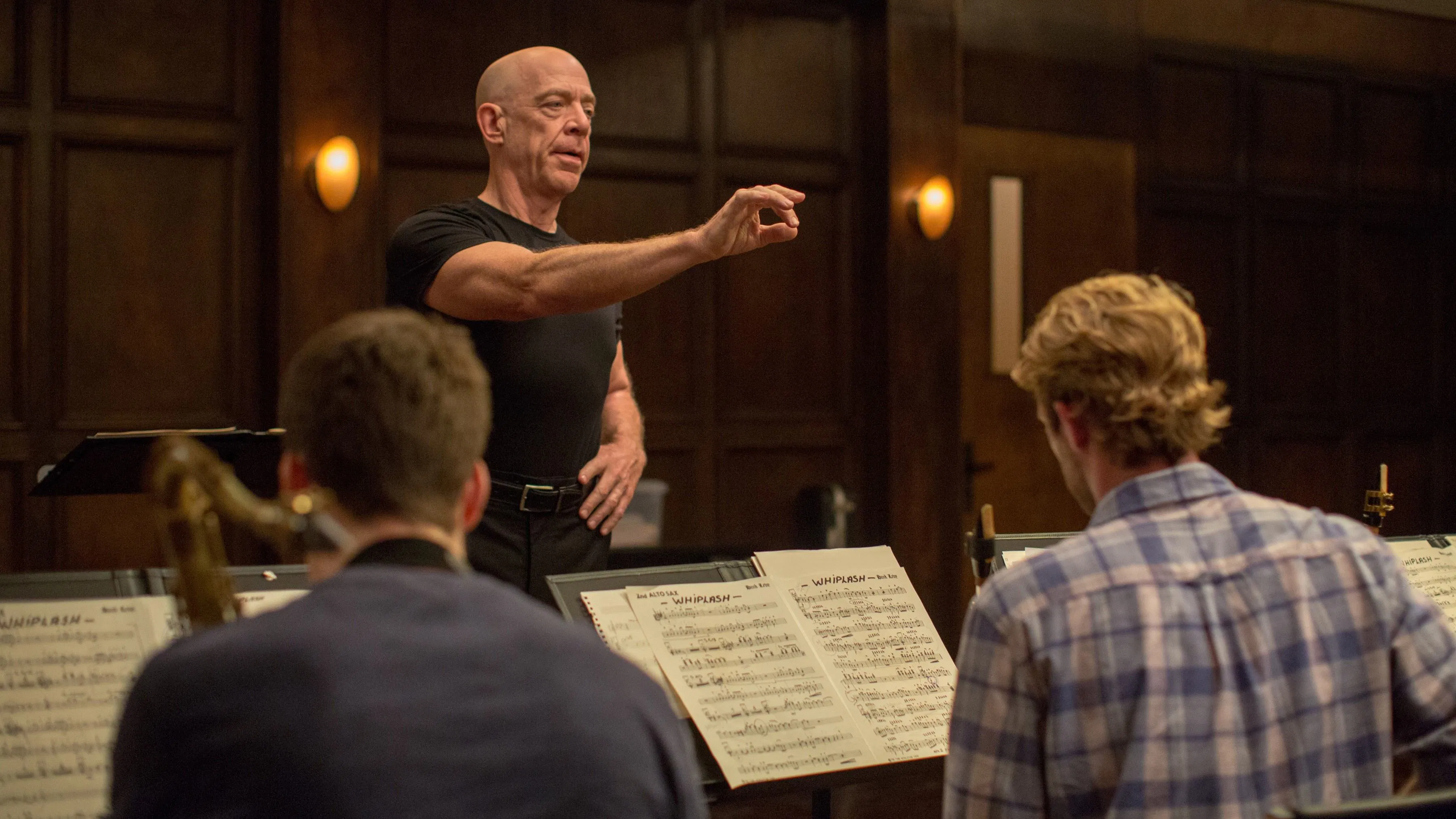
In a product team, you often find the best soloists: talented designers, brilliant developers, visionary product managers. And yet, the music sometimes struggles to take shape. Roadmaps slip, frustration rises, and the final product does not reflect the sum of these talents.
This chaos is not a fatality, and it is often symptomatic of a missing conductor. My role, as Project Director at Source.paris, is to take on this copilot role to orchestrate complexity and establish a rhythm where everyone can perform at their best.
From my experience with supporting clients in the luxury, entertainment, or consumer electronics industries, I have drawn three essential lessons to transform a disjointed delivery into a smooth and impactful process.
1. From symptom to diagnosis: naming the real problem.
The first reflex is to look beyond the obvious symptoms: "we are behind schedule," "the specs are not clear." The real problem is often deeper: there is a lack of a common operational language. When each person reads a different score, we get noise, not a symphony.
For one of our clients, the challenge was to ensure smooth coordination between highly specialized teams. The existing structure sometimes led to fragmented collaboration and a product roadmap mainly influenced by technical priorities. As a result, the mobile app experience struggled to reach the same level of quality as their physical experiences. The diagnosis was not a lack of talent, but the absence of a single, reliable source of truth to align that talent.
What you can do: Before looking for a new tool or redoing a schedule, ask your team this question: "Where does the information live within us? Is it accessible, unambiguous, and up to date for everyone at the same time?" The answer is your true starting point.
2. The framework is the true deliverable.
It is a common mistake to think that the work of a design agency is to deliver screens. Our conviction is that our most important deliverable is not a wireframe, but a healthy and effective collaboration framework. Good interfaces are merely a consequence of that. Our clients do not come seeking wireframes; they come seeking answers.
At the same client, this meant not starting with visual design, but with the structuring of tools. We implemented clear rules in Figma for design consistency and a rigorous use of Jira for tracking. Every piece of information had its place, making the workflow predictable and transparent. This allowed the development teams to gain in efficiency and serenity, with a remarkable result: the six-month roadmap was fully respected, with no delays.
What you can do: Think of your tools and rituals not as an administrative constraint, but as the "product" you offer your team to help them work well. A well-designed Design Language System, clear documentation, short and effective sync rituals... that is what allows for systematization without rigidity.
3. Act as a copilot, not as a consultant.
Transformation cannot be dictated by an external actor. It must be embodied from within. It is not a "project management" service that we sell separately; it is an essential facet of our copilot role, deployed when we identify that the organization needs help to structure itself.
Our approach with several of our clients has been to integrate ourselves as a "design direction" within their organization. I worked daily with their teams to streamline processes, clarify decision-making, and ensure that the new framework was not only defined but also adopted. We work in tandem: no silos, no surprises.
The ultimate goal is always autonomy. We love to "empower" our clients so that they shine internally.
What you can do: If you engage an external partner, ensure that they have the willingness to "integrate" into your teams rather than staying at the periphery. The goal should not be to create dependency, but to catalyze lasting change.
In conclusion, the greatest success of a conductor is to make themselves unnecessary.
The greatest victory is when the orchestra has so deeply integrated the rhythm and vision that it can play the score in perfect harmony, almost without a baton. It is at this moment that a product can finally express its full potential.
Mélanie, our project director reveals 3 key principles for transforming product delivery. Discover how to orchestrate your team to move from chaos to clarity, inspired by our support with several clients.
In a product team, you often find the best soloists: talented designers, brilliant developers, visionary product managers. And yet, the music sometimes struggles to take shape. Roadmaps slip, frustration rises, and the final product does not reflect the sum of these talents.
This chaos is not a fatality, and it is often symptomatic of a missing conductor. My role, as Project Director at Source.paris, is to take on this copilot role to orchestrate complexity and establish a rhythm where everyone can perform at their best.
From my experience with supporting clients in the luxury, entertainment, or consumer electronics industries, I have drawn three essential lessons to transform a disjointed delivery into a smooth and impactful process.
1. From symptom to diagnosis: naming the real problem.
The first reflex is to look beyond the obvious symptoms: "we are behind schedule," "the specs are not clear." The real problem is often deeper: there is a lack of a common operational language. When each person reads a different score, we get noise, not a symphony.
For one of our clients, the challenge was to ensure smooth coordination between highly specialized teams. The existing structure sometimes led to fragmented collaboration and a product roadmap mainly influenced by technical priorities. As a result, the mobile app experience struggled to reach the same level of quality as their physical experiences. The diagnosis was not a lack of talent, but the absence of a single, reliable source of truth to align that talent.
What you can do: Before looking for a new tool or redoing a schedule, ask your team this question: "Where does the information live within us? Is it accessible, unambiguous, and up to date for everyone at the same time?" The answer is your true starting point.
2. The framework is the true deliverable.
It is a common mistake to think that the work of a design agency is to deliver screens. Our conviction is that our most important deliverable is not a wireframe, but a healthy and effective collaboration framework. Good interfaces are merely a consequence of that. Our clients do not come seeking wireframes; they come seeking answers.
At the same client, this meant not starting with visual design, but with the structuring of tools. We implemented clear rules in Figma for design consistency and a rigorous use of Jira for tracking. Every piece of information had its place, making the workflow predictable and transparent. This allowed the development teams to gain in efficiency and serenity, with a remarkable result: the six-month roadmap was fully respected, with no delays.
What you can do: Think of your tools and rituals not as an administrative constraint, but as the "product" you offer your team to help them work well. A well-designed Design Language System, clear documentation, short and effective sync rituals... that is what allows for systematization without rigidity.
3. Act as a copilot, not as a consultant.
Transformation cannot be dictated by an external actor. It must be embodied from within. It is not a "project management" service that we sell separately; it is an essential facet of our copilot role, deployed when we identify that the organization needs help to structure itself.
Our approach with several of our clients has been to integrate ourselves as a "design direction" within their organization. I worked daily with their teams to streamline processes, clarify decision-making, and ensure that the new framework was not only defined but also adopted. We work in tandem: no silos, no surprises.
The ultimate goal is always autonomy. We love to "empower" our clients so that they shine internally.
What you can do: If you engage an external partner, ensure that they have the willingness to "integrate" into your teams rather than staying at the periphery. The goal should not be to create dependency, but to catalyze lasting change.
In conclusion, the greatest success of a conductor is to make themselves unnecessary.
The greatest victory is when the orchestra has so deeply integrated the rhythm and vision that it can play the score in perfect harmony, almost without a baton. It is at this moment that a product can finally express its full potential.
Enjoyed this article? You’ll love Open!
Join our newsletter to get the very best of our content every month — insights, client stories and design experiments, straight to your inbox.
Enjoyed this article? You’ll love Open!
Join our newsletter to get the very best of our content every month — insights, client stories and design experiments, straight to your inbox.
Read next