Meet Lucas Boucher, our first AI Design Engineer

Responsable Marketing & Communication
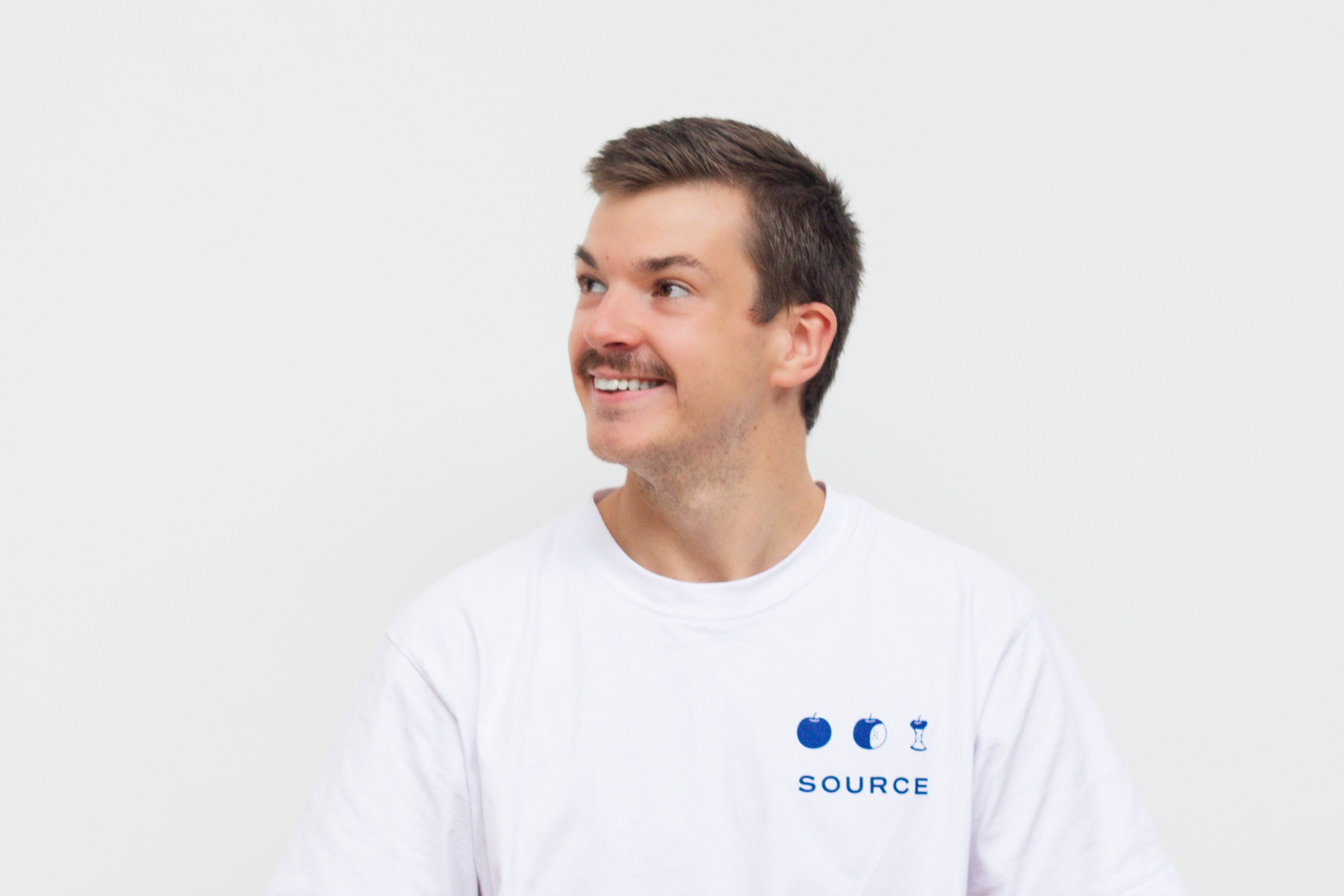
A few months ago, we announced the creation of the AI Design Engineer position. A vision become reality, now embodied by Lucas Boucher, a talent who has grown with us.
We firmly believe that AI does not replace our profession, but rather reinforces our standards. It pushes us to focus on our true value: organising complexity to make it understandable and actionable. Meet Lucas Boucher, who embodies this vision as the first AI Design Engineer at Source.paris
To begin with, can you summarize your career at Source for us?
I arrived in 2023 for my third-year internship at HETIC, in web development. I then continued with two years of work-study at Source, for my CTO & Tech Lead master's degree, also at HETIC. During this period, I grappled with the complexity of our projects, whether by contributing to the rationalisation of front-end components for Pathé Cinémas, confronting the requirements of Shopify for Jacques Marie Mage, SR Suntour and Just One Eye, or developing React applications for Asmodée and Forge. This experience gave me in-depth knowledge of our technical standards and our culture of excellence, where design and engineering are two sides of the same coin.
The arrival of generative AI was a turning point. As a developer, how did you experience this transformation?
Like everyone else, I saw the emergence of generative AI such as ChatGPT transform the way we produce and learn, both in terms of the fundamentals of optimisation and good coding practices, and in terms of more complex algorithms.
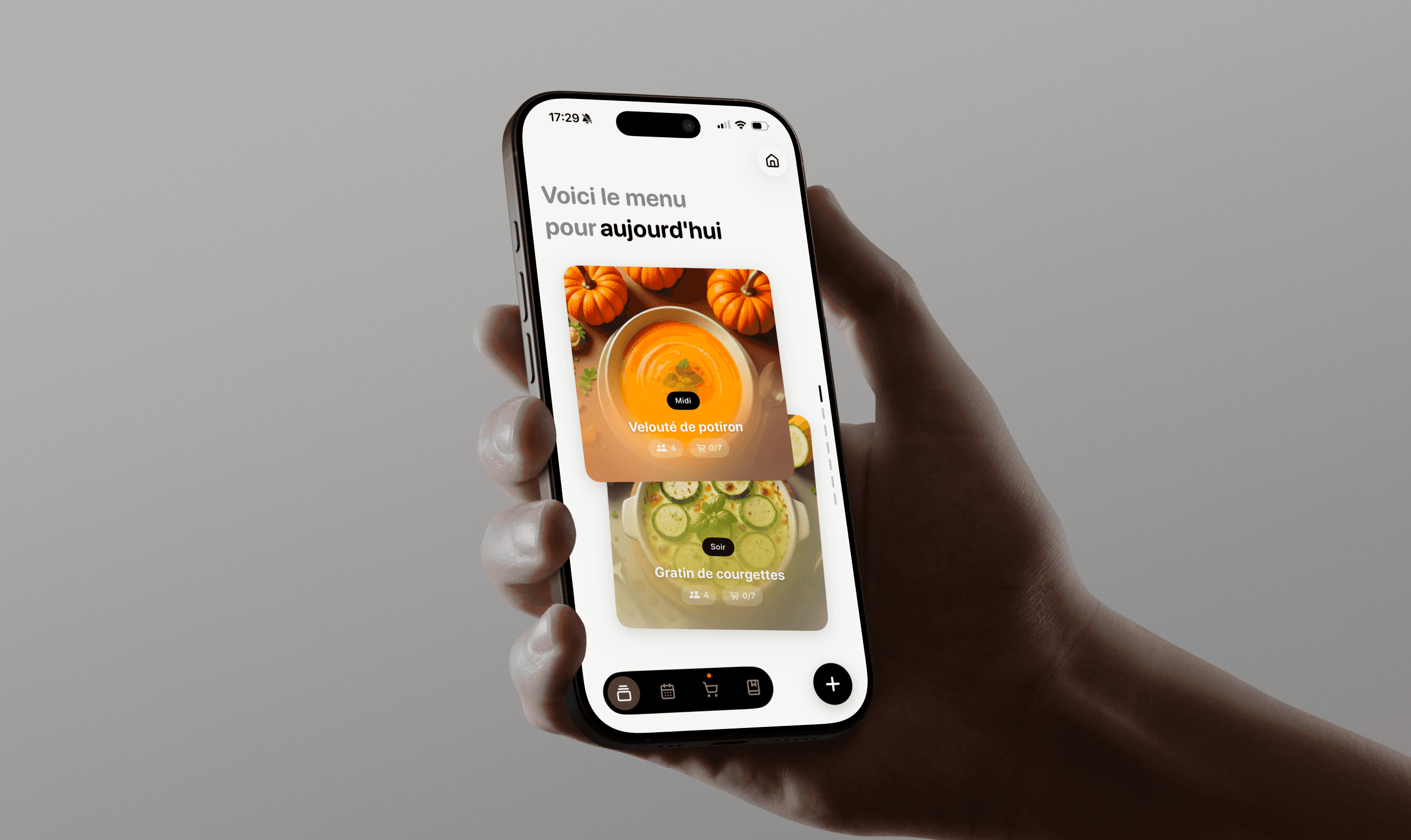
I then incorporated tools such as Cursor to speed up development and document components. I also carried out advanced experiments, such as a local LLM to generate interfaces or an MCP connected to Figma for Pathé. The real breakthrough came during a client workshop where, by synchronising Lovable with Cursor via Github, I was able to deliver a working prototype in just a few days.
AI also breaks down language barriers. Someone with a good foundation in web programming can now get up to speed in just a few hours on native mobile, for example.
This position was not a simple evolution, but a new role. What prompted you to apply for it?
It was a real challenge, especially since the position was open to everyone. But I reached the end of my work-study programm with one certainty: I wanted to continue contributing my technical expertise here. So I worked twice as hard to prove that I was the right person for the job and get the position.
In concrete terms, what will your responsibilities be as an AI Design Engineer?
My role is a combination of several areas:
Orchestrating our tools, identifying the best external solutions and developing our own customised tools.
Delivering interactive prototypes quickly so that our customers can experiment with them, get to grips with them and give us their feedback as soon as possible.
Developing complete production applications, using AI as an accelerator.
Creating custom AI agents to redirect, personalise and tailor AI to the image, needs and interests of our customers.
Exploiting models to serve dynamic, new types of interfaces.
Ensuring that speed does not sacrifice quality.
There is a lot of talk about speed and automation. What is the role of human experts in the face of increasingly accessible no-code and vibe coding tools?
It is crucial. While AI is improving day by day in terms of code quality, it still needs to be fully guided by humans at the start of a project. The architecture, data models and technical choices depend on the overall vision and scalability of the project.
Today, only an expert with a strong product and technical background will be able to judge whether what is generated is relevant, secure, accessible and maintainable.
Finally, what is the next step for AI at Source?
We are exploring a number of avenues. My new position will serve to structure and find a common voice for accelerating and assisting our production without compromising on quality. For example, setting up a bootstrap for rapid prototyping, faithful to our clients' brand universe, which can evolve into production. Or documentation of our design systems adapted to AI.
Thank you, Lucas, and welcome to this exciting mission.
A few months ago, we announced the creation of the AI Design Engineer position. A vision become reality, now embodied by Lucas Boucher, a talent who has grown with us.
We firmly believe that AI does not replace our profession, but rather reinforces our standards. It pushes us to focus on our true value: organising complexity to make it understandable and actionable. Meet Lucas Boucher, who embodies this vision as the first AI Design Engineer at Source.paris
To begin with, can you summarize your career at Source for us?
I arrived in 2023 for my third-year internship at HETIC, in web development. I then continued with two years of work-study at Source, for my CTO & Tech Lead master's degree, also at HETIC. During this period, I grappled with the complexity of our projects, whether by contributing to the rationalisation of front-end components for Pathé Cinémas, confronting the requirements of Shopify for Jacques Marie Mage, SR Suntour and Just One Eye, or developing React applications for Asmodée and Forge. This experience gave me in-depth knowledge of our technical standards and our culture of excellence, where design and engineering are two sides of the same coin.
The arrival of generative AI was a turning point. As a developer, how did you experience this transformation?
Like everyone else, I saw the emergence of generative AI such as ChatGPT transform the way we produce and learn, both in terms of the fundamentals of optimisation and good coding practices, and in terms of more complex algorithms.
I then incorporated tools such as Cursor to speed up development and document components. I also carried out advanced experiments, such as a local LLM to generate interfaces or an MCP connected to Figma for Pathé. The real breakthrough came during a client workshop where, by synchronising Lovable with Cursor via Github, I was able to deliver a working prototype in just a few days.
AI also breaks down language barriers. Someone with a good foundation in web programming can now get up to speed in just a few hours on native mobile, for example.
This position was not a simple evolution, but a new role. What prompted you to apply for it?
It was a real challenge, especially since the position was open to everyone. But I reached the end of my work-study programm with one certainty: I wanted to continue contributing my technical expertise here. So I worked twice as hard to prove that I was the right person for the job and get the position.
In concrete terms, what will your responsibilities be as an AI Design Engineer?
My role is a combination of several areas:
Orchestrating our tools, identifying the best external solutions and developing our own customised tools.
Delivering interactive prototypes quickly so that our customers can experiment with them, get to grips with them and give us their feedback as soon as possible.
Developing complete production applications, using AI as an accelerator.
Creating custom AI agents to redirect, personalise and tailor AI to the image, needs and interests of our customers.
Exploiting models to serve dynamic, new types of interfaces.
Ensuring that speed does not sacrifice quality.
There is a lot of talk about speed and automation. What is the role of human experts in the face of increasingly accessible no-code and vibe coding tools?
It is crucial. While AI is improving day by day in terms of code quality, it still needs to be fully guided by humans at the start of a project. The architecture, data models and technical choices depend on the overall vision and scalability of the project.
Today, only an expert with a strong product and technical background will be able to judge whether what is generated is relevant, secure, accessible and maintainable.
Finally, what is the next step for AI at Source?
We are exploring a number of avenues. My new position will serve to structure and find a common voice for accelerating and assisting our production without compromising on quality. For example, setting up a bootstrap for rapid prototyping, faithful to our clients' brand universe, which can evolve into production. Or documentation of our design systems adapted to AI.
Thank you, Lucas, and welcome to this exciting mission.
Enjoyed this article? You’ll love Open!
Join our newsletter to get the very best of our content every month — insights, client stories and design experiments, straight to your inbox.
Enjoyed this article? You’ll love Open!
Join our newsletter to get the very best of our content every month — insights, client stories and design experiments, straight to your inbox.
Read next